
Most people think an air conditioner makes cold air. It actually works more like a sponge for heat: it soaks heat up inside your home and wrings it out outside. Once you see how that loop works, it’s much easier to understand why an AC stops cooling, and what a technician is looking for.
Rather have a licensed HVAC pro handle it?
Free referral to a licensed local HVAC pro. A real person calls you back, 7 AM – 8 PM, 7 days a week.
The heat loop at a glance
The 5 steps
- Absorb. The blower pulls warm air from your rooms across the cold indoor coil. The refrigerant inside the coil soaks up the heat, and cooler air flows back into your home.
- Carry out. The refrigerant, now carrying your home’s heat, travels outside through the larger, insulated copper line.
- Squeeze. The compressor in the outdoor unit pressurizes the refrigerant, which makes it hotter than the outside air, even on a 100-degree day.
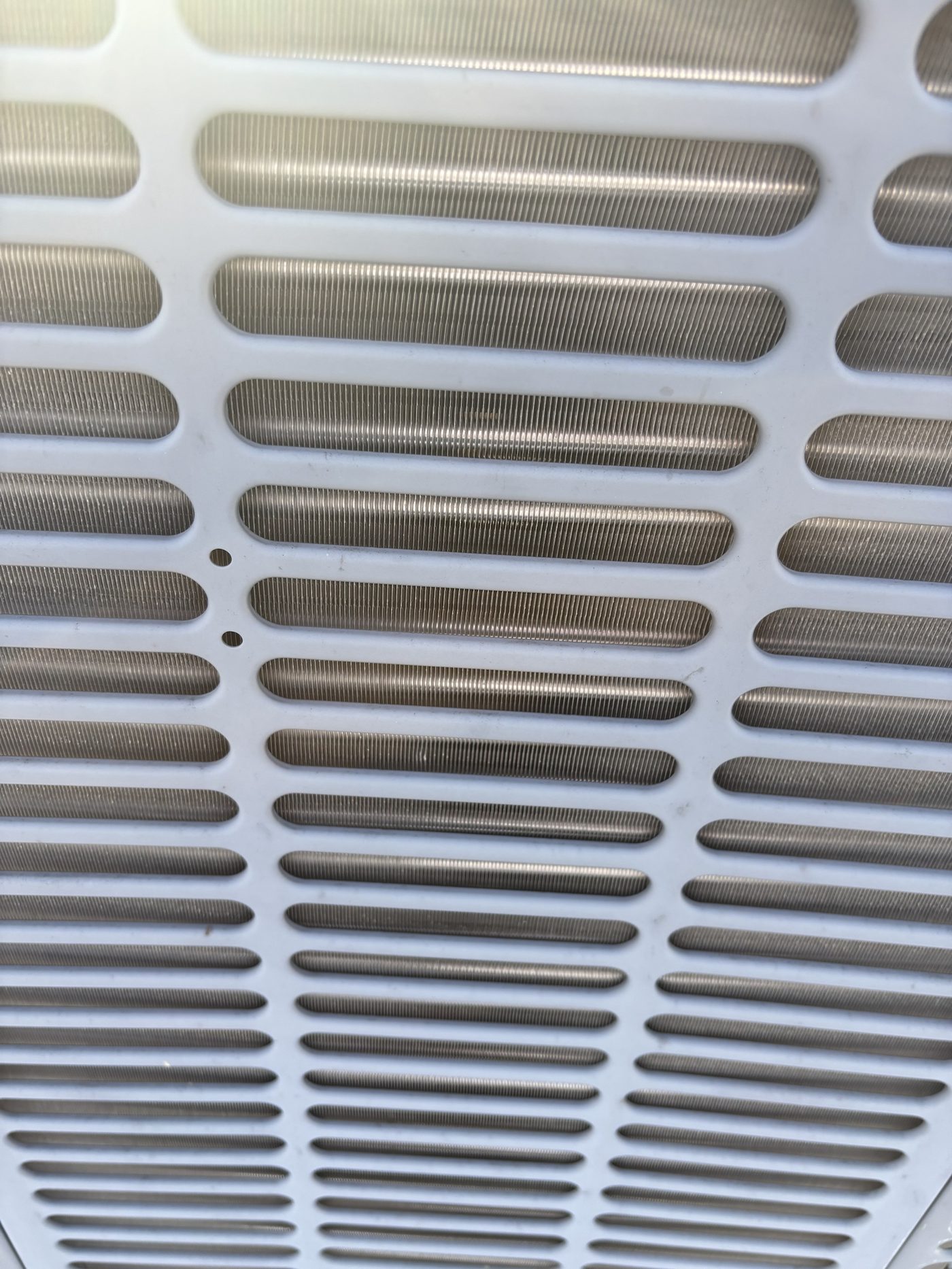
- Release. The outdoor fan blows air across the hot outdoor coil, and the heat escapes into the air outside. That’s the warm air you feel blowing out of the top of the unit.
- Return. Having given up its heat, the refrigerant turns back into a liquid and flows inside through the smaller line. A small metering valve drops its pressure, which makes it cold again, and the loop starts over.
Why an AC stops cooling
Almost every cooling problem breaks one step of that loop:
- Dirty filter or blocked vents (step 1). Too little air crosses the indoor coil, so it can’t pick up heat. The coil can even freeze into a block of ice.
- Refrigerant leak (steps 2 to 5). Refrigerant isn’t used up like gas in a car; if it’s low, there’s a leak. Adding more without fixing the leak is only a temporary patch.
- Compressor or capacitor problem (step 3). If the outdoor unit hums but won’t start, a failed capacitor is a common cause. Capacitors hold a dangerous charge, so leave this one to a pro.
- Dirty outdoor coil or failed fan motor (step 4). The heat has nowhere to go, so the system runs constantly and struggles on hot afternoons.
- Restriction in the line or metering valve (step 5). Less common, and something only a technician can diagnose with gauges.
What you can check yourself
A few safe checks can solve simple problems or help the technician: the thermostat, the breaker, the filter and the outdoor unit. See our 7 things to check before you call, and our pre-summer tune-up checklist to keep every step of the loop working. Have a heat pump? It runs this same loop in both directions; see our heat pump page.
Need a licensed pro?
Call us and a real person will connect you with an independent, licensed AC contractor who serves your part of the San Fernando Valley. It’s free for homeowners.
Valley HVAC Network is a free referral service, not an HVAC contractor. All work is done by independent contractors licensed by the California CSLB. Learn how it works.
Prefer a callback?
Leave your name and number and a real person will call you back to connect you with a licensed local HVAC contractor. It’s free for homeowners, with no obligation. Or call (818) 658-2668.